Prioritizing investment across 80+ urban lakes

Building a data-driven framework to prioritize long-term environmental investment across a citywide lake system.

at a glance

CLIENT

City of Orlando

LOCATION

Orlando, Florida

SYSTEM

Surface waters

FOCUS

Surface water analysis, water quality evaluation, economic benefit

PROJECT TYPE

Lake system prioritization and capital planning framework

at a glance

client

City of Orlando

location

Orlando, Florida

system

Surface waters

focus

Surface water analysis, water quality evaluation, economic benefit

project type

Lake system prioritization and capital planning framework

The Challenge

What was at stake

Orlando’s urban lakes are central to the City’s identity and function. They influence stormwater management, flood resilience, water quality, recreation, tourism, and the livability of surrounding neighborhoods.

Many lakes face nutrient enrichment, sediment accumulation, shoreline degradation, and watershed pressures driven by urban growth. At the same time, funding for restoration and improvement is limited.

City leaders needed a clear way to determine where investments would deliver the greatest long-term benefit. Without a structured strategy, resources risked being allocated based on short-term visibility rather than system-level impact.

The decisions would shape environmental performance as well as the community and economic value of an interconnected network of water bodies.

our approach

How we advanced the work

Drummond Carpenter built a citywide prioritization framework that combined environmental data, surface water analysis, and implementation feasibility, including:

  • Analyzing historical water quality trends across more than 80 lakes
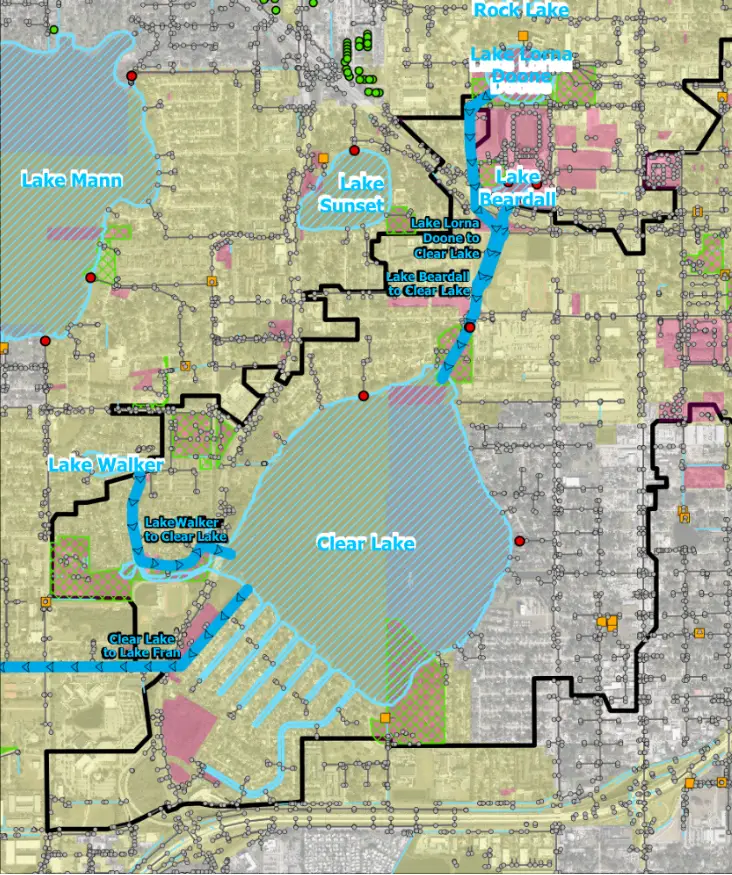
  • Evaluating contributing watersheds through hydrologic and hydraulic analysis
  • Screening nutrient loading and impairment
  • Assessing stormwater infrastructure influences
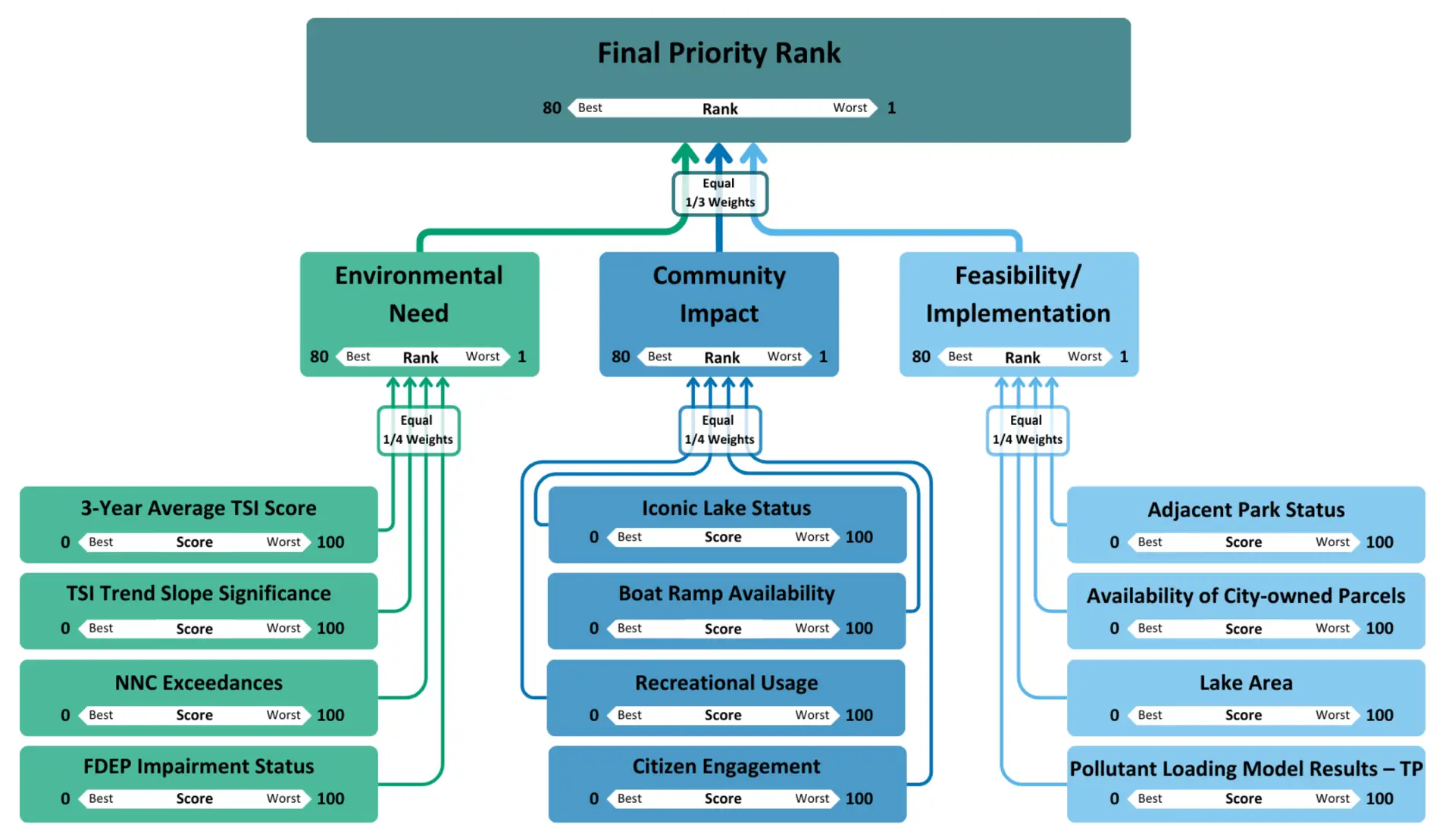
  • Modeling priorities across multiple criteria
  • Connecting technical metrics with capital planning considerations

We constructed a decision model that considered environmental need, regulatory drivers, cost-effectiveness, and practical implementation pathways rather than ranking lakes on any single factor.

The resulting framework gave the City a consistent way to compare needs across more than 80 lakes and prioritize investments based on environmental impact, community impact, and feasibility for improvement.

ORLANDO’S LAKE RESOURCES
0 +

City-monitored lakes

0

Acres of lakes

0 %

Lakes with degrading water quality

0

Lakes with a TMDL

our methodology

Integrated analysis at system scale

Urban lakes function as part of broader watershed systems. Improvements in one location can influence conditions elsewhere, while upstream pressures can undermine localized efforts.

The prioritization model brought together:

  • Long-term water quality monitoring records
  • Nutrient loading estimates and impairment indicators
  • Watershed land-use patterns and runoff characteristics
  • Stormwater infrastructure conditions
  • Capital improvement planning inputs
  • Recreational and tourism function

The model translated these inputs into a practical basis for funding and implementation decisions. More than 80 lakes were ranked according to their environmental impact, community impact, and feasibility for environmental improvement.

The Outcome

What changed

  • Established a structured prioritization strategy for 80+ lakes
  • Informed long-term capital improvement planning
  • Identified projects with the greatest system-wide impact
  • Connected environmental goals with implementation feasibility
  • Strengthened competitiveness for grant funding
  • Created a repeatable decision-support framework for future initiatives

The framework gave the City a practical roadmap for directing limited resources toward improvements with the greatest potential benefit across its lake system.

Looking ahead

Why it matters

With more than 80 urban lakes and limited resources for restoration and improvement, the City cannot address every need at once. Understanding where environmental need intersects with community impact and practical feasibility gives decision-makers a stronger basis for long-term investment.

By bringing those considerations into a repeatable framework, Drummond Carpenter helped the City of Orlando establish a more consistent way to prioritize improvements across its lake system.

related solutions

Where this work connects