Evaluating high and significant hazard dams through hydraulic modeling and engineering analysis to prioritize risk and guide long-term infrastructure investment.
Michigan’s network of dams supports flood control, water supply, recreation, and ecological systems across the state. Many of these structures are more than 80 years old and face deterioration, changing hydrologic conditions, and evolving safety expectations.
Failure of even a single dam can cause downstream flooding, infrastructure damage, environmental harm, and risk to human life. State agencies need reliable assessments to determine which structures require immediate intervention and how to allocate limited resources effectively.
The assessments needed to address regulatory requirements while giving the state a sound basis for protecting communities and making long-term infrastructure investments.

Drummond Carpenter has supported Michigan’s statewide dam risk assessment through engineering analysis, hydraulic modeling and risk evaluation. Our team brought together decades of inspection records, engineering documentation, geospatial information, and hydraulic analyses to evaluate risk and inform statewide priorities. This included:
Together, these assessments gave the State a consistent basis for understanding risk across its aging dam infrastructure, identifying structures requiring priority action and directing repair and rehabilitation investments where they are most needed.
Dam safety depends on both structural integrity and the hydrologic forces acting across the watershed. Each assessment evaluated conditions that could influence dam performance during extreme events, including:
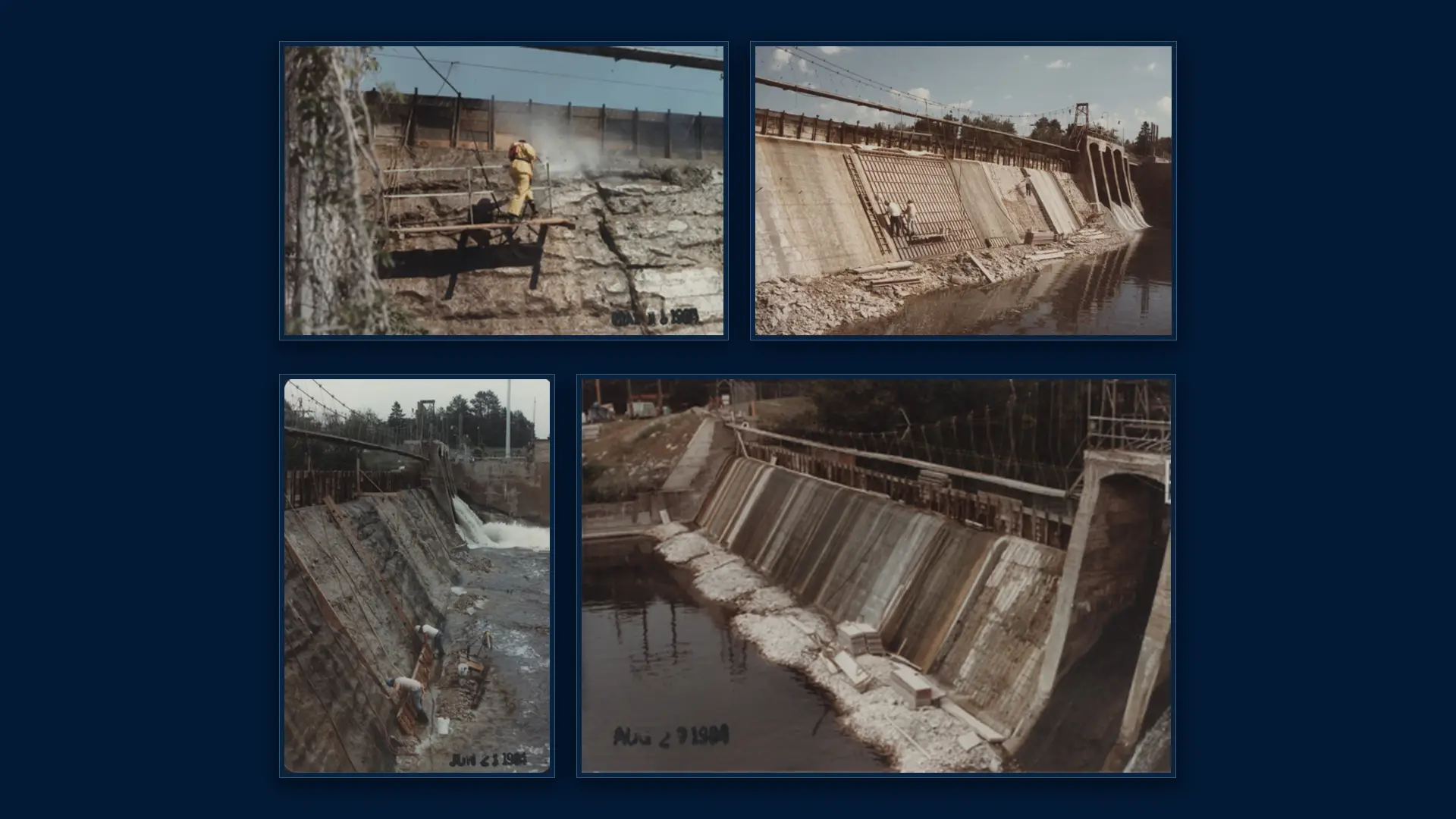
Dam breach inundation mapping, potential life loss analysis, and downstream impact assessments helped quantify the consequences of failure under extreme conditions. Historic photographs provide additional context for the aging infrastructure evaluated through the project.
The assessments gave Michigan a clearer view of risk across its dam portfolio and a defensible basis for determining where intervention and investment should come first.
As dams age, changing hydrologic conditions and downstream development can alter both the likelihood and consequences of failure. Understanding those risks gives public agencies a stronger basis for deciding which structures need attention first and where limited infrastructure resources should be directed.
By combining engineering records, hydraulic modeling, and consequence analysis, Drummond Carpenter helped Michigan identify priority risks and plan repairs and rehabilitation across its aging dam infrastructure.