
Advancing the WaterTowns® program through long-term technical support and green infrastructure implementation across Southeast Michigan.
Urbanization across Southeast Michigan has significantly altered natural hydrology, increasing stormwater runoff, pollutant transport, and flood risks throughout the Clinton River watershed.
Communities needed cost-effective solutions that could restore natural processes while improving water quality and resilience. The Clinton River Watershed Council launched the WaterTowns® program to help municipalities implement green infrastructure, but doing so across a 760-square-mile watershed required technical expertise, planning support, and sustained coordination across jurisdictions.
Without a structured approach, individual efforts risked remaining fragmented and limited in their impact.
For more than 10 years, Drummond Carpenter has supported the planning, design, and implementation of distributed green infrastructure throughout the Clinton River watershed, including:
The program approaches individual installations as part of a larger watershed strategy while using placemaking to reflect the social, economic, and environmental identities of participating communities.
Through sustained technical support and implementation across more than 20 municipalities, Drummond Carpenter helped turn distributed green infrastructure into a coordinated watershed-scale program with measurable benefits for stormwater runoff, water quality, and flood resilience.
Successful green infrastructure depends on local acceptance and sustained stewardship. Drummond Carpenter supported community-based planning throughout the program to connect technical design with the places where projects would be implemented.
That work included:
Artistic renderings of site plans helped partners and community members visualize proposed improvements, building understanding and acceptance before implementation.
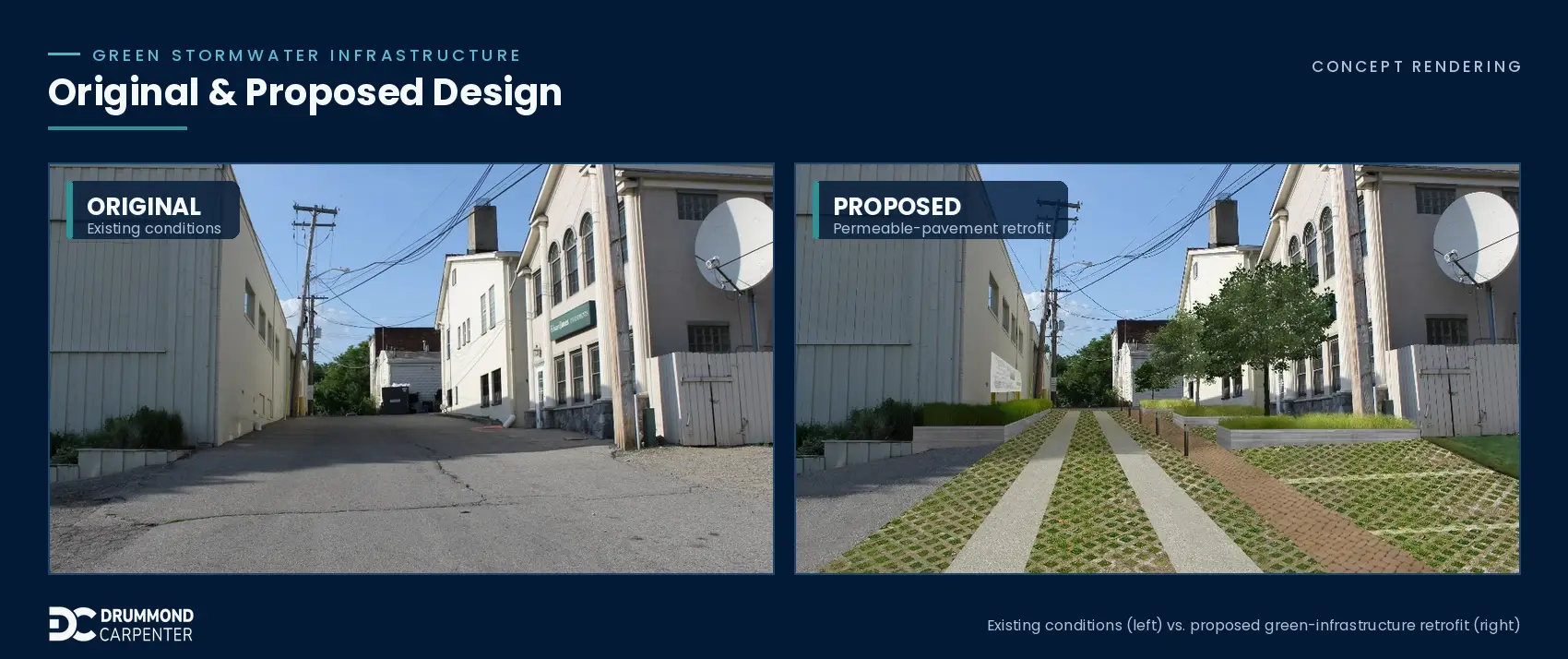
Together, the projects show how coordinated implementation across jurisdictions can produce measurable environmental benefits at watershed scale.
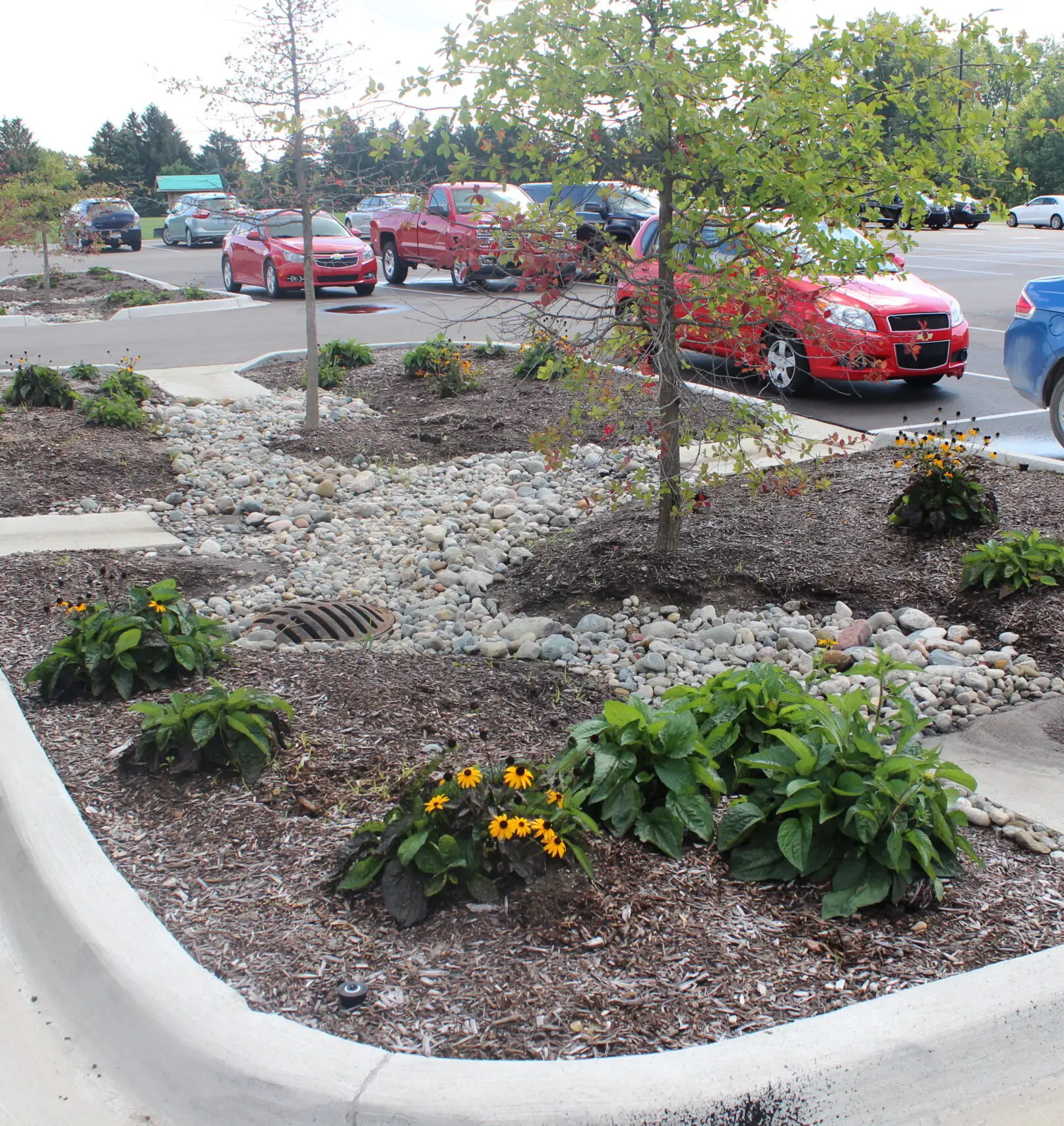
Watersheds function as interconnected systems, and the effects of urban development accumulate across municipal boundaries. Addressing those impacts at scale requires individual projects to contribute to a larger strategy that communities can implement and sustain over time.
More than a decade of work through WaterTowns® shows how distributed green infrastructure can build toward watershed-scale impact while creating improvements that fit the communities where they are implemented.